Exemplary Info About The Mathematical Relationship Between Wattage And Decibels
SOLVED:The relationship between the number of decibels βand the ...
The Mathematical Relationship Between Wattage and Decibels
You've probably seen it before: a speaker company boasts that their new amp is “twice as loud” because it doubles the wattage. Spoiler alert: they're lying. Or, at best, they're misunderstanding the math. The relationship between wattage and decibels is one of the most misunderstood concepts in audio, sound reinforcement, and even electrical engineering. I've spent over a decade troubleshooting systems where someone threw more power at a problem, only to be disappointed by barely audible results. Let me save you that headache.
Here's the truth, bluntly: decibels are logarithmic, wattage is linear, and the two don't play nice unless you understand the formula. If you're building a PA system, designing headphones, or just trying to understand why your 100-watt amp isn't that much louder than a 50-watt one, this is the article you need. No fluff. Just the math, the practical implications, and a few curse-worthy realities.
The Core Formula: Why It's Not a 1:1 Game
Let's start with the money equation. The relationship between power (in watts) and sound pressure level (in decibels) is governed by a simple logarithmic function. The formula looks like this:
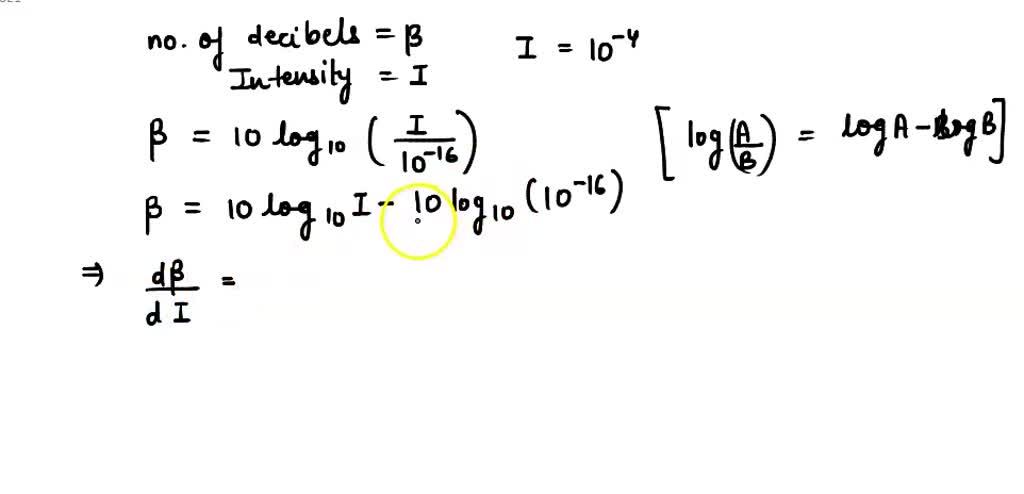
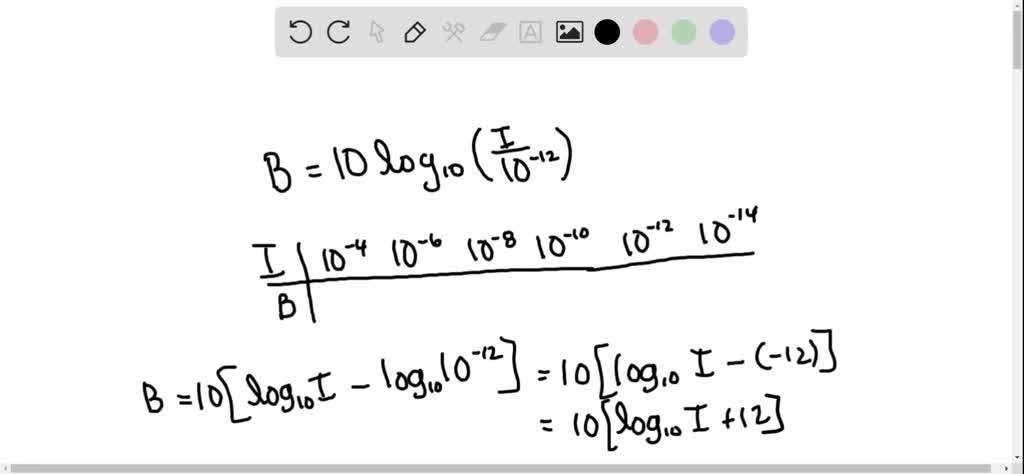
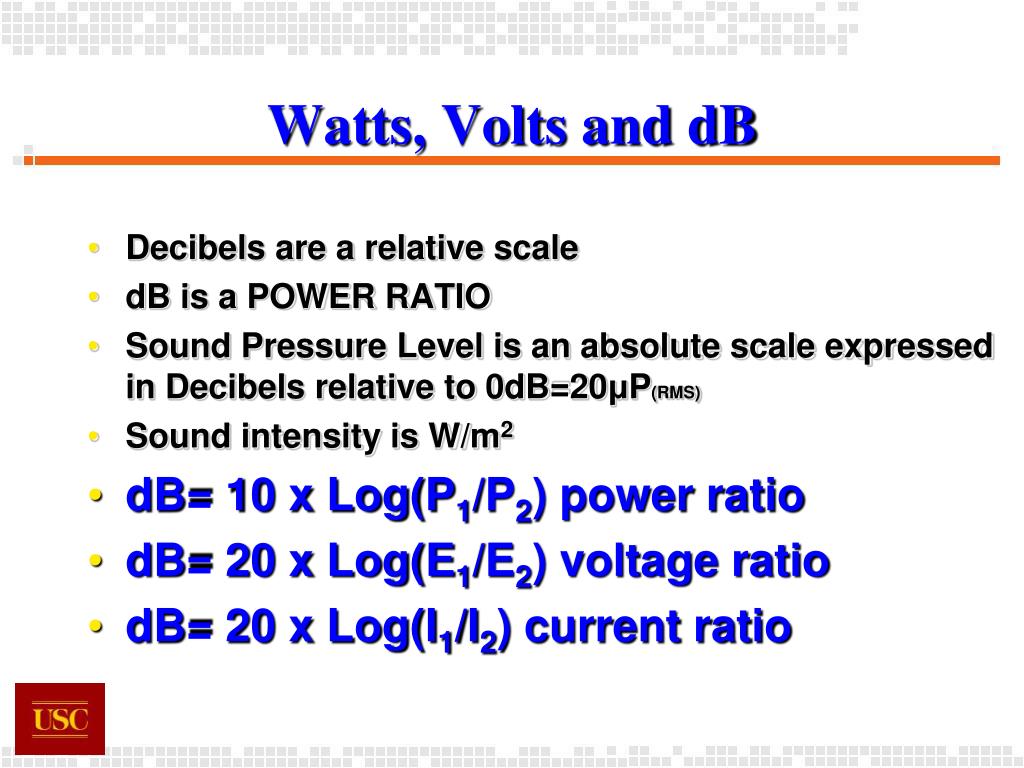
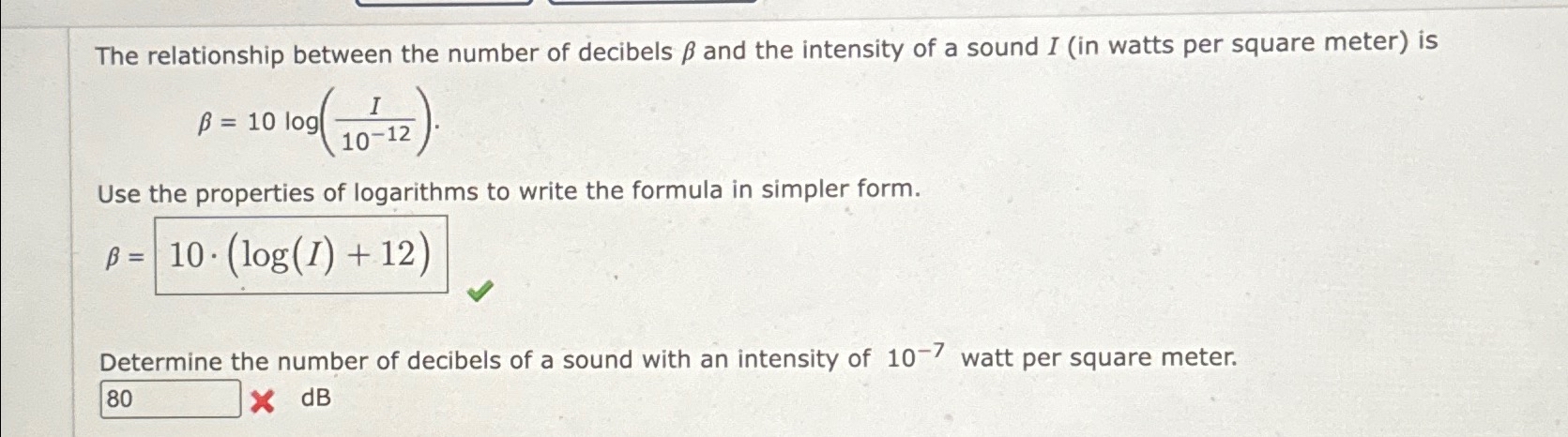
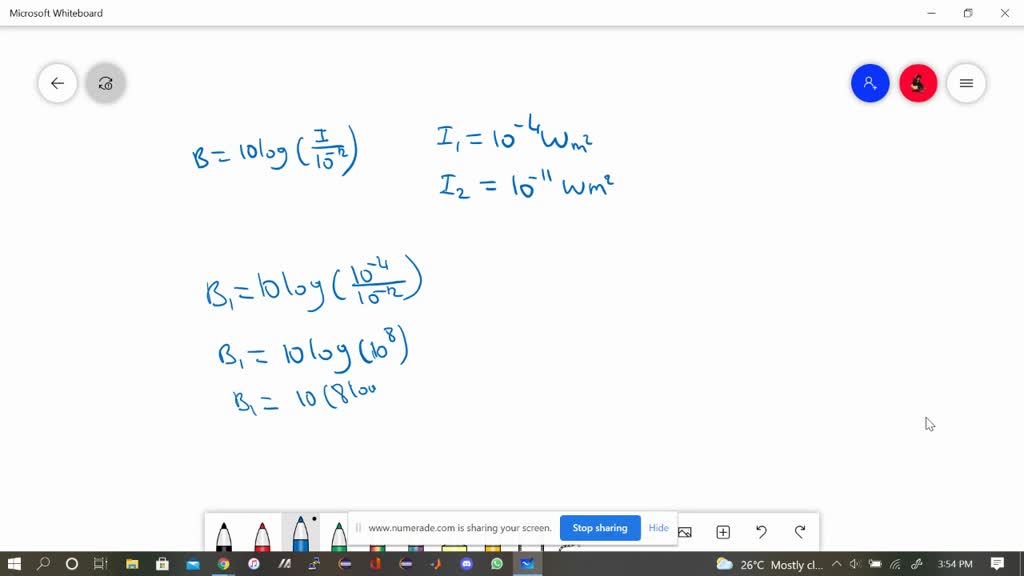
dB = 10 × log₁₀ (P₂ / P₁)Where P₂ is the new power and P₁ is the reference power. That’s it. But the devil is in the interpretation.
The Logarithmic Scale: Your Ears Are Liars
Human hearing doesn't work linearly. A 10-watt amp doesn't sound “twice as loud” as a 5-watt amp. In fact, to perceive a sound as twice as loud, you need roughly a 10 dB increase. And here's where the math stings: a 10 dB increase requires ten times the wattage. Seriously. To go from 10 watts to 100 watts, you gain about 10 dB of perceived loudness. That's it. Your wallet will feel lighter, but your ears will barely notice.
Think about it this way: if you're running a 50-watt guitar amp and you want it to sound “twice as loud,” you need a 500-watt amp. That's not a typo. The mathematical relationship is harsh, but it's physics. Your ears compress sound naturally, protecting you from damage, but also making power increases feel underwhelming.
SOLVED:The relationship between the number of decibels βand the ...
The 3 dB Rule: The Smallest Noticeable Change
Here's a number you should tattoo on your brain: 3 dB. A 3 dB increase in sound level is generally considered the smallest change the average human ear can detect under ideal conditions. And guess what? To get a 3 dB increase, you need to double the wattage. Yes, double.
This is why upgrading from a 50-watt amp to a 100-watt amp feels like a rip-off. It's mathematically correct, but perceptually disappointing. I've had clients swear their new 200-watt subwoofer “sounds the same” as their old 100-watt one. That's because it's only 3 dB louder. Honestly? It's a cruel trick of nature.
Practical Implications: Wattage in the Real World
Now that we've established the math, let's talk about what this means when you're actually buying gear or setting up a system. The relationship between wattage and decibels isn't just an academic exercise; it dictates your budget, your speaker choice, and your sanity.
Speaker Sensitivity: The Forgotten Variable
Most people obsess over amplifier wattage while ignoring speaker sensitivity. That's a rookie mistake. Sensitivity is measured in dB SPL (sound pressure level) at 1 watt, measured at 1 meter. A speaker with a sensitivity of 90 dB will produce 90 dB of sound with just 1 watt. A speaker with 96 dB sensitivity will produce 96 dB with the same 1 watt.
PPT - Power handling and power compression in loudspeakers PowerPoint ...
That 6 dB difference is huge. To get the same 96 dB from the 90 dB speaker, you'd need to pump in 4 watts (because 6 dB requires 4x the power). Now scale that up: if you want 102 dB, the 96 dB speaker needs 4 watts, while the 90 dB speaker needs 16 watts. See the pattern? High-sensitivity speakers are your best friend if you want loudness without a nuclear power plant.
Here's a quick breakdown of what happens with different sensitivity ratings:
The takeaway? Don't just look at the wattage rating on an amp. Match it to your speaker's sensitivity. Otherwise, you're buying a Ferrari and putting bicycle tires on it.
Headroom: Why 3 dB Matters More Than You Think
In professional audio, we talk about “headroom” constantly. It's the difference between your average operating level and the maximum level before distortion (clipping). If your system is running at 90 dB average and your amp can only hit 93 dB peak, you have 3 dB of headroom. That's not enough for dynamic music like orchestral pieces or hard rock.
To get 6 dB of headroom, you need four times the power. To get 10 dB of headroom, you need ten times the power. This is why live sound engineers spec massive amps—not because they want to deafen the audience, but because they need clean, undistorted peaks. The mathematical relationship dictates that you overbuild your power section by a factor of 2 to 4 times your continuous needs. It's a big deal.
Solved The relationship between the number of decibels β | Chegg.com
I once had a client insist on using a 100-watt amp for a jazz trio. The speakers were 95 dB sensitivity. At 10 feet, the trio averaged 85 dB. The peaks hit around 95 dB. That 100-watt amp had maybe 3 dB of headroom. Every cymbal crash sounded like sandpaper. We swapped to a 400-watt amp, and suddenly the system had 9 dB of headroom. Clean as a whistle. The extra wattage wasn't about being louder—it was about being cleaner.
Common Misconceptions and Pitfalls
Over the years, I've heard every myth in the book. Let me debunk a few before you waste your money.
Myth: “Doubling Wattage Doubles Loudness”
We covered this, but it bears repeating. Doubling wattage gives you a 3 dB increase, which is barely perceptible. To double perceived loudness, you need a 10 dB increase, which requires ten times the wattage. If you're buying an amp thinking you'll get twice the volume by doubling the power, you'll be disappointed. Save your cash or invest in more sensitive speakers.
Myth: “Higher Wattage Amps Always Sound Better”
A 1000-watt amp running at 10 watts sounds worse than a 100-watt amp running at 80 watts. Why? Because amplifiers have a “sweet spot” where they operate most linearly. Running a massive amp at low power often introduces noise, distortion, and poor damping factor. The relationship between wattage and decibels is about headroom, not absolute power. A well-matched system—where the amp can deliver clean peaks without being maxed out—sounds better than a brute-force approach.
Myth: “Speaker Wattage Ratings Are Limits”
A speaker rated for 200 watts continuous doesn't mean you can't feed it 400 watts on peaks. Speakers handle short-term peaks much higher than their continuous rating. The real limit is thermal (heat buildup) and mechanical (cone excursion). If you're playing bass-heavy music, you'll hit mechanical limits before thermal ones. Understand your speaker's program rating and peak rating, not just the continuous number. The decibel math still applies, but the physical limits of the driver matter just as much.
The Inverse Square Law: Distance Matters
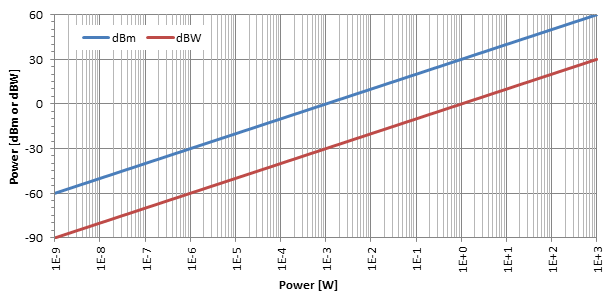
Power and amplitude: Watts, Volts and referenced Decibels
There's another layer to this. Decibels don't just depend on wattage and sensitivity; they depend on distance. Every time you double your distance from a sound source, the sound level drops by 6 dB (in a free field, no reflections). So if you're getting 100 dB at 1 meter from a speaker, you'll get 94 dB at 2 meters, 88 dB at 4 meters, and so on.
To compensate for that loss, you need more power. For a 6 dB drop, you need four times the wattage. For a 12 dB drop, you need 16 times the wattage. This is why outdoor concerts use massive arrays of speakers—not because they want to, but because physics forces them to. The mathematical relationship between wattage and decibels is inseparable from the inverse square law.
Here's a practical checklist for planning a system:
SOLVED:Use the following information. The relationship between the ...
It sounds complex, but after doing it a few times, it becomes second nature. Seriously, sketch it out on a napkin next time you're at a bar with a band.
Common Questions About The Mathematical Relationship Between Wattage and Decibels
How many decibels is a doubling of wattage?
A doubling of wattage results in an increase of 3 dB. This is a fixed mathematical relationship: dB = 10 × log₁₀(2) ≈ 3.01 dB. In practice, this is the smallest change most people can notice, but it's far from a doubling of perceived loudness.
Why does a 100-watt amp not sound twice as loud as a 50-watt amp?
Because perceived loudness is logarithmic, not linear. A 100-watt amp is only 3 dB louder than a 50-watt amp. To sound twice as loud, you need a 10 dB increase, which requires 500 watts (10 times the power). The mathematical relationship between power and perception is the reason why.
What is the formula for converting watts to decibels?
The formula is: dB = 10 × log₁₀ (P₂ / P₁), where P₂ is the new power and P₁ is the reference power. If you're comparing to 1 watt, the formula becomes dB = 10 × log₁₀ (P). For example, 10 watts = 10 × log₁₀(10) = 10 dB relative to 1 watt.
Does speaker sensitivity affect the wattage-to-decibel relationship?
Absolutely. Speaker sensitivity determines how many decibels you get from 1 watt at 1 meter. A higher sensitivity speaker requires less wattage to achieve the same SPL. For example, a 96 dB speaker needs only 1 watt for 96 dB, while an 86 dB speaker needs 10 watts for the same output. The mathematical relationship between wattage and decibels always holds, but sensitivity shifts the baseline.
Can you damage speakers by using too much wattage?
Yes, but it's more common to damage speakers by using too little wattage. Underpowering an amp causes clipping (distortion), which sends high-frequency energy to the tweeters, often frying them. Overpowering can also damage speakers, but modern amps have limiters. The safe approach is to match the amp's RMS rating to the speaker's program rating, with some headroom for peaks. The decibel math helps you calculate that headroom precisely.
The mathematical relationship between wattage and decibels is elegant, unforgiving, and absolutely essential to understand if you care about sound quality. Forget the marketing hype. Remember the 3 dB rule, respect the logarithmic scale, and always factor in speaker sensitivity and distance. Your ears—and your bank account—will thank you.

Post a Comment for "Exemplary Info About The Mathematical Relationship Between Wattage And Decibels"
Post a Comment