Supreme Tips About Key Components Of Contextual Vs Physical Logical Models
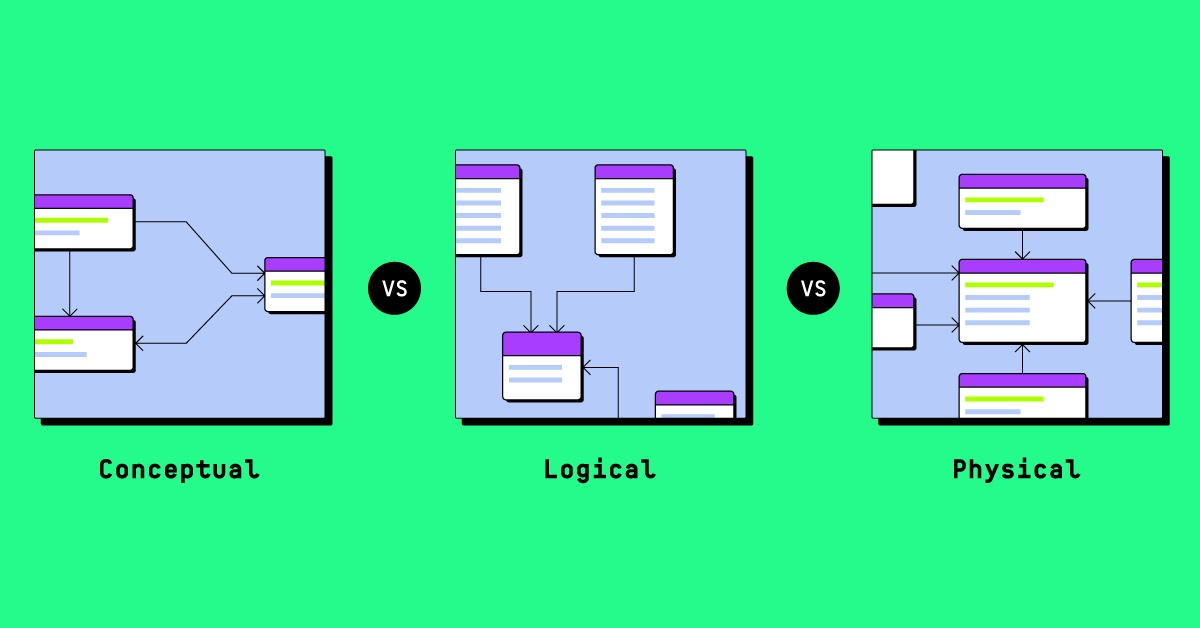
Conceptual vs Logical vs Physical Data Models: Key Differences
The Key Components of Contextual vs Physical Logical Models
You know that moment when you're staring at a data model and you realize it's trying to do two completely different jobs at once? That's the tension between contextual and physical logical models. I've been wrestling with this distinction for over a decade, and honestly? Most teams get it wrong. They either over-abstract until nothing makes sense in production, or they get so granular that the model becomes a tangled mess of implementation details.
Let me break this down properly.
Understanding the Core Divide Between Contextual and Physical Logical Models
The first thing you need to internalize is that these two models serve fundamentally different masters. A contextual logical model is about meaning, relationships, and business rules. It's the "what" and the "why." A physical logical model is about storage, performance, and constraints. It's the "how" and the "where."
Seriously, if you try to merge them too early, you'll end up with a Frankenstein model that satisfies nobody. I've seen it happen more times than I care to count. Teams rush into physical design decisions before they've even agreed on what a "customer" actually means in their business context.
The Key Components of Contextual Models
When I'm building a contextual logical model, I'm looking at four specific things. First, entities that represent real-world business concepts. Not tables, not columns—entities. A "Customer" entity. A "Product" entity. An "Order" entity. These are the nouns of your business story.
Second, I'm mapping relationships. One-to-many. Many-to-many. These aren't foreign keys yet—they're business rules. A Customer places many Orders. An Order contains many Products. Simple, clean, and completely divorced from how you'll store it.
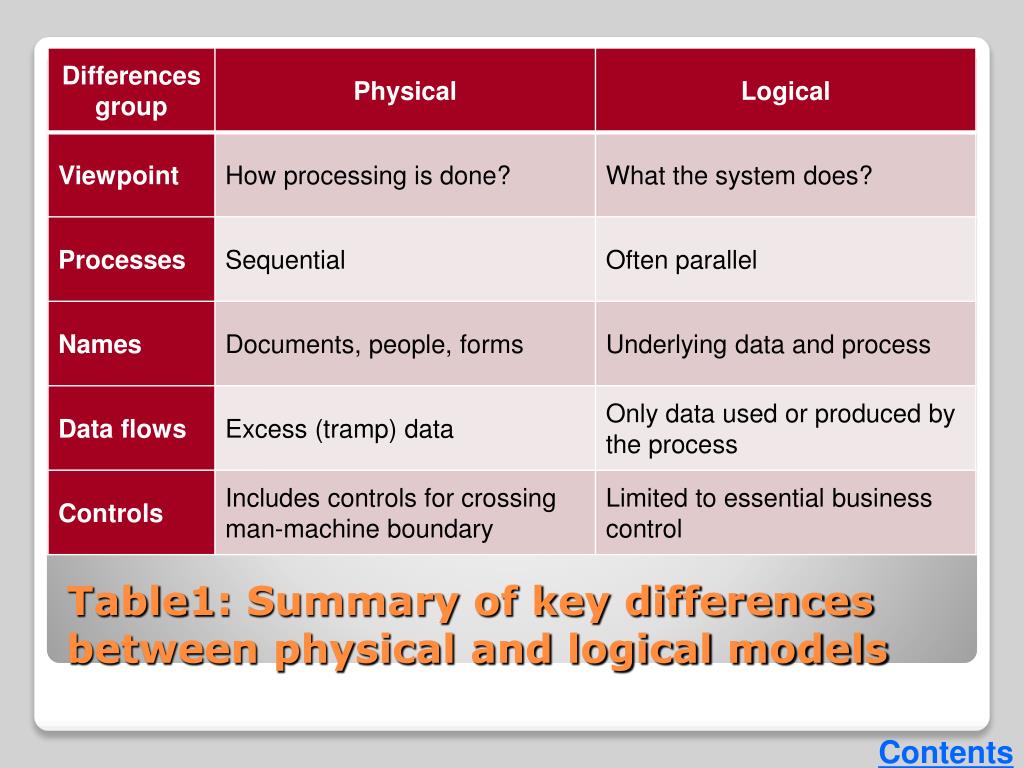
PPT - Management Information Systems PowerPoint Presentation, free ...
Third, attributes that describe those entities. Customer Name. Order Date. Product Price. But here's the kicker—I'm not worrying about data types yet. That's a physical concern. In a contextual model, an attribute is just a descriptor.
Fourth, business rules and constraints. "An Order must have at least one Product." "A Customer can have only one primary address." These rules shape the model before any database technology enters the conversation.
The Key Components of Physical Logical Models
Now we get into the gritty stuff. A physical logical model takes that beautiful, clean contextual model and drags it into reality. This is where you start talking about primary keys, foreign keys, and indexing strategies.
The components shift dramatically. You're now dealing with tables instead of entities. Columns instead of attributes. You're specifying data types—VARCHAR(255) versus TEXT, INTEGER versus BIGINT. These decisions have real consequences for storage and query performance.
Look—here's where most people stumble. They think a physical logical model is just a contextual model with data types added. It's not. It's a complete rethinking of structure based on how the data will actually be accessed and stored.
How Contextual Models Drive Better Physical Design
I've consulted for companies that skipped the contextual logical model entirely. They went straight to physical design. The result? A database schema that mirrored their application code rather than their business reality. It was a nightmare to maintain.
A good contextual model acts as a sanity check. It forces you to answer questions like "What is a Customer, really?" before you start creating tables. And those answers directly inform your physical design decisions.

Logical Data Modeling _ Data Vault Ensemble Modeling Standards – MYDAE
Mapping Contextual Entities to Physical Tables
This is where the art comes in. Not every entity in your contextual logical model becomes a table in your physical logical model. Sometimes you denormalize. Sometimes you split entities into multiple tables for performance reasons.
For example, in a contextual model, a "Customer Address" might be a single entity with multiple attributes. But in a physical model, you might split it into separate tables for billing addresses, shipping addresses, and work addresses—each with different indexing requirements.
It's a big deal. The mapping process requires you to understand both the business meaning and the technical constraints simultaneously. That's why experienced data modelers are worth their weight in gold.
Handling Relationships in Both Models
Relationships behave differently in each model. In a contextual logical model, a many-to-many relationship between "Student" and "Course" is perfectly natural. It reflects reality. Students take multiple courses, courses have multiple students.
In a physical logical model, that same relationship requires a junction table. You need "Enrollment" as a physical artifact, even if it wasn't a named entity in your contextual model. This is where the two models diverge in meaningful ways.
Honestly? The most common mistake I see is trying to preserve contextual relationships exactly in the physical model. It leads to over-normalization and performance nightmares. Sometimes you need to break the rules.
Practical Components You Can't Ignore

Conceptual vs. Logical vs. Physical Data Modeling - Dataversity
Let me give you the checklist I use when evaluating any data model. These components apply to both contextual and physical logical models, but they manifest differently in each.
Naming Conventions and Documentation
In a contextual model, names should be business-friendly. "Customer Account Status" makes sense to stakeholders. In a physical model, you might use "cust_acct_stat" for efficiency, but you better have clear documentation mapping back to the business term.
I can't stress this enough. Without proper documentation linking the two models, you're creating a maintenance nightmare. Six months from now, someone will look at "cust_acct_stat" and have no idea what it means.
Granularity and Abstraction Levels
The contextual logical model operates at a higher level of abstraction. It's about concepts and relationships. The physical logical model operates at a lower level, dealing with implementation specifics.
Here's a quick breakdown of how granularity differs:
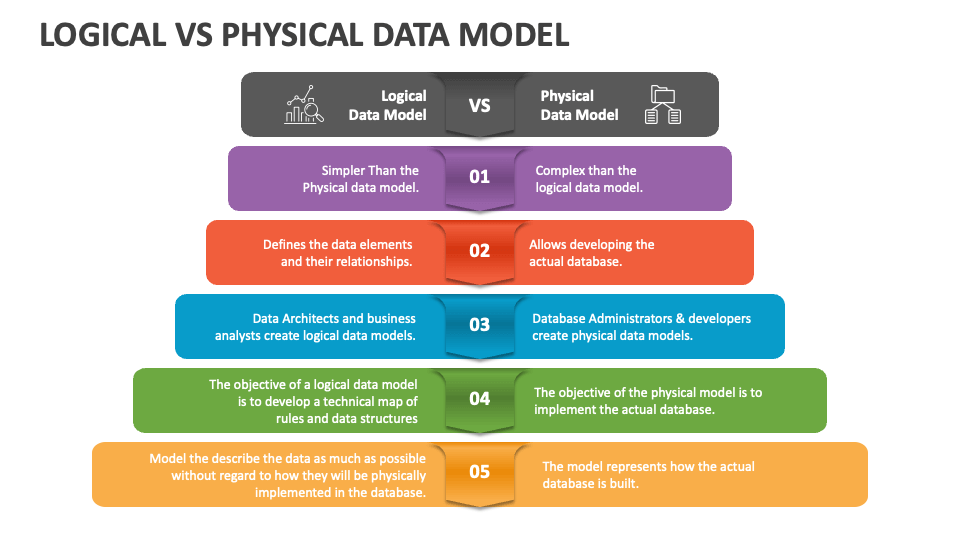
What Is Conceptual Data Model Logical And Physical at Timothy Garrett blog
Performance Considerations in Physical Models
This is where the physical logical model really earns its keep. You need to think about indexing strategies, partitioning, and storage allocation. These concerns don't exist in the contextual model.
For instance, you might decide to create a clustered index on a date column in your physical model because queries frequently filter by date range. That decision has zero impact on the contextual model, but it can make or break application performance.
Common Questions About the Key Components of Contextual vs Physical Logical Models
What's the main difference between contextual and physical logical models?

Conceptual vs Logical vs Physical Data Model
The contextual logical model focuses on business meaning, entities, and relationships without considering how data will be stored. The physical logical model translates those business concepts into actual database structures, including tables, columns, data types, and performance optimizations. One is about understanding, the other about implementation.
Do I always need both a contextual and physical model?
Not always, but I strongly recommend it for complex systems. Simple applications with straightforward data might skip the contextual model. But for enterprise systems, data warehouses, or any project with multiple stakeholders, having both models prevents costly mistakes and miscommunications.
How do I handle many-to-many relationships in a physical model?
In a contextual logical model, many-to-many relationships are perfectly fine. In a physical logical model, you need to introduce a junction table that breaks the many-to-many relationship into two one-to-many relationships. This is a fundamental difference between the two models.
Can I automate the conversion from contextual to physical models?
Partially, but not completely. Tools can help with basic transformations—converting entities to tables, attributes to columns. But the nuanced decisions about indexing, denormalization, and performance optimization require human judgment. Automation handles the mechanical parts; experience handles the strategic parts.
What happens if I skip the contextual model entirely?
You risk building a database that mirrors your application code rather than your business reality. The physical logical model becomes tightly coupled to whatever application first used it, making future changes painful. You also lose the ability to communicate with business stakeholders about data meaning without getting bogged down in technical details.

Post a Comment for "Supreme Tips About Key Components Of Contextual Vs Physical Logical Models"
Post a Comment