The Secret of Info About How To Manage Environmental Resources Sustainably
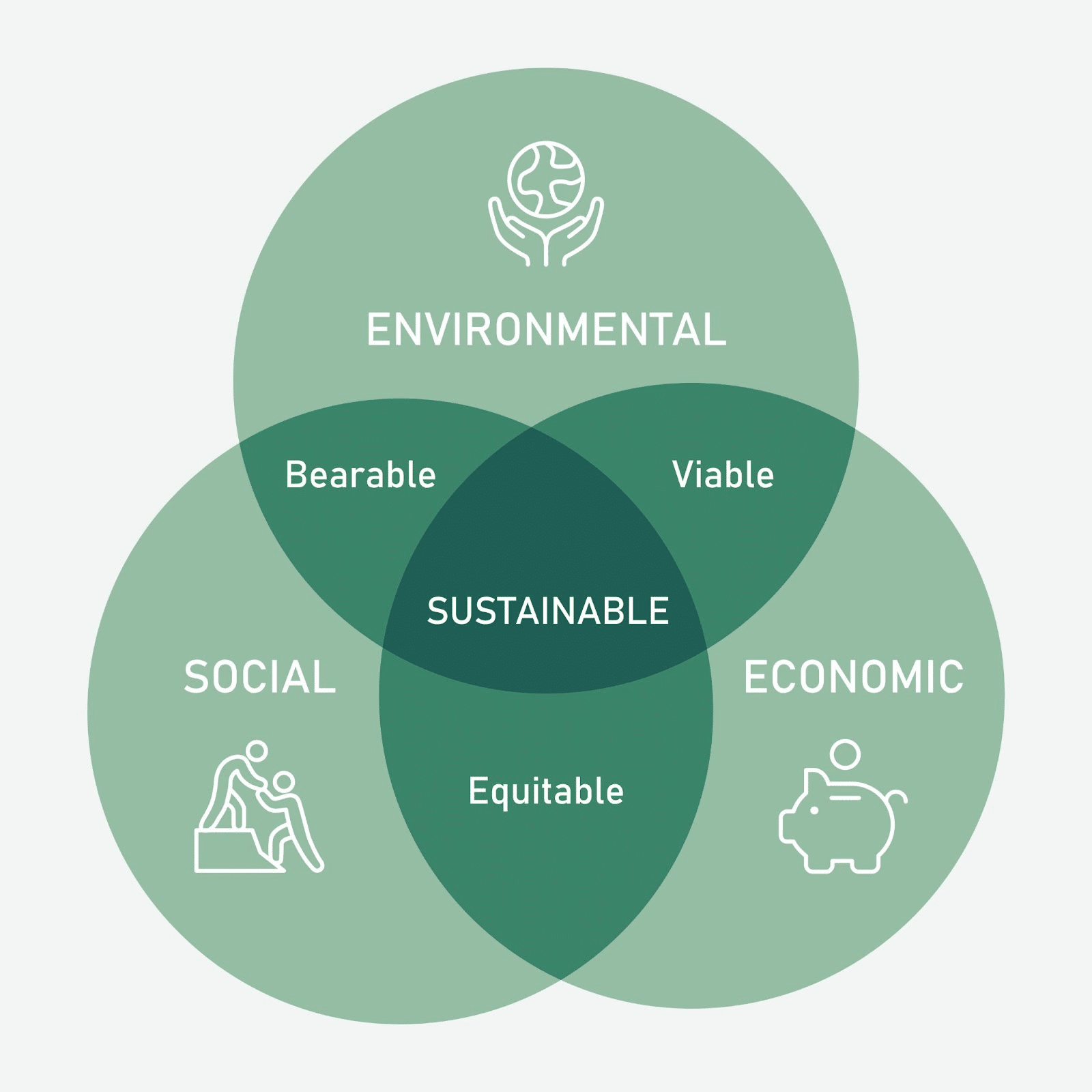
Sustainability And Environmental Management – FDOMF
How to manage environmental resources sustainably
The Core Disconnect: We're Still Thinking About This Wrong
Look—I've spent over a decade in the field, from muddy boots in reforestation projects to tense boardroom meetings about supply chain audits. And the single biggest hurdle I see isn't a lack of technology or even a lack of money. It's a fundamental misunderstanding of what it actually means to manage environmental resources in a way that doesn't just turn a profit for a quarter and then collapse. Honestly? Most people treat nature like a bank account they can withdraw from indefinitely without ever making a deposit.
You see this everywhere. A company boasts about its "green" initiative, but when you peel back the layers, they're simply shifting the burden—dumping their pollution on a less regulated country or using a "renewable" resource faster than it can regenerate. That isn't management. That's looting with a green hashtag. The real trick, the one that keeps me up at night, is figuring out how to use the stuff we need without breaking the machine that produces it.
Sustainable management isn't about doing less. It's about doing it smarter. It requires a total shift in perspective, moving from a mindset of extraction to one of stewardship. We have to stop asking, "How much can we take?" and start asking, "How much can this system give, forever, without breaking a sweat?" That single question changes everything.
It's a big deal because our current trajectory is a one-way street. We are drawing down our natural capital—the soil, the water, the forests, the minerals—at a rate that the planet cannot replenish. If this were a business, you'd be fired for such reckless accounting. The good news? We know how to fix it. It just requires discipline, a willingness to embrace complexity, and a genuine respect for the systems we depend on.
Breaking the Cycle of Linear Consumption
The old model is simple: Take, Make, Waste. You dig it up, you turn it into a product, and when that product breaks or you're bored with it, you throw it in a hole. This is the most destructive pattern in human history. To manage environmental resources sustainably, you have to kill that linear model and replace it with something circular.
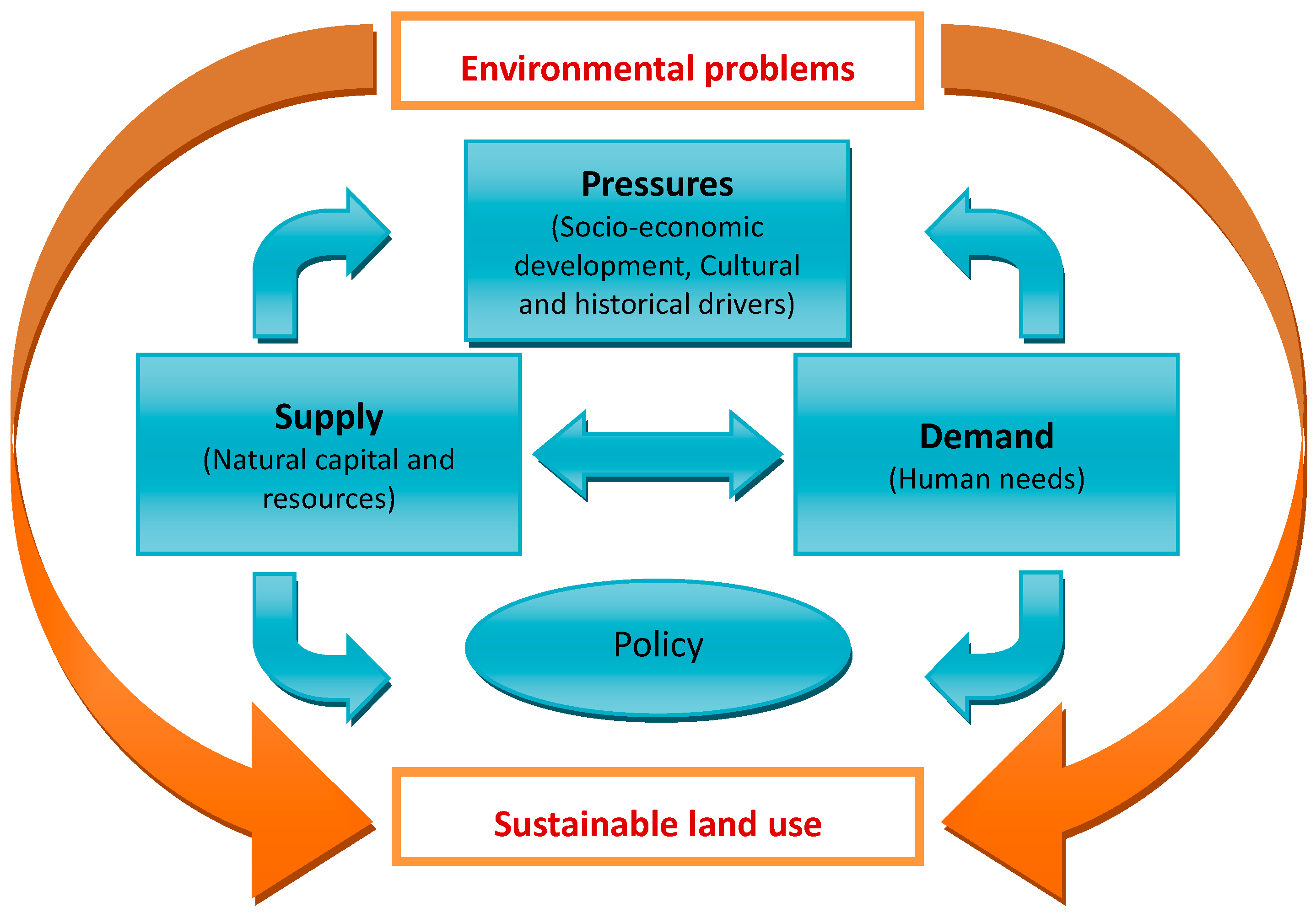
Integration of Water Resources Management Strategies in Land Use ...
The Economics of the Circular Loop
A circular economy isn't just a buzzword; it's a survival strategy. The idea is to design out waste from the very beginning. Before you even manufacture a phone or a pair of sneakers, you ask: "How do I get every single atom of this material back at the end of its life?" That's the goal. Zero waste isn't a slogan—it's a design specification.
Seriously, think about your own life. How much of your trash is actually a resource in the wrong place? Food scraps can become energy. Old electronics contain gold and rare earth elements that are far cheaper (and less destructive) to recover than to mine again. The barrier here isn't technical; it's logistical and psychological. We need systems that make it easier to return materials than to throw them away.
I worked with a factory that was dumping tons of plastic scrap. We didn't reduce their production. We just built a loop where that scrap was ground up, cleaned, and fed back into the injection molding machine. Their raw material costs dropped 30%. They weren't doing it to save the world. They did it because it was cheaper. That's the secret—sustainable management has to make economic sense or it won't scale.
This applies to managing natural resources like water and timber too. You don't just pump water out of an aquifer once. You treat it, reuse it for cooling, then treat it again for irrigation. You don't just cut a forest. You manage the age classes of the trees, ensuring that for every one you take, three are growing to replace it. It's a technical dance, not a smash-and-grab.
Water: The Ultimate Test Case
If you want to know if a city or a farm is serious about sustainability, look at their water management. Water is the lifeblood of every ecosystem and every economy. Yet we treat it like it's infinite. It's not. The Colorado River, the Tigris-Euphrates, the Murray-Darling—these are systems that are screaming for help because we manage environmental resources like they are infinite.
Here is the brutal truth: You can't create new water. You can only manage what you have. This means shifting from "demand management" to "allocation management." It means finding leaks (many cities lose 30% of their water to broken pipes before it even reaches a tap). It means pricing water correctly, which is politically toxic but economically essential.
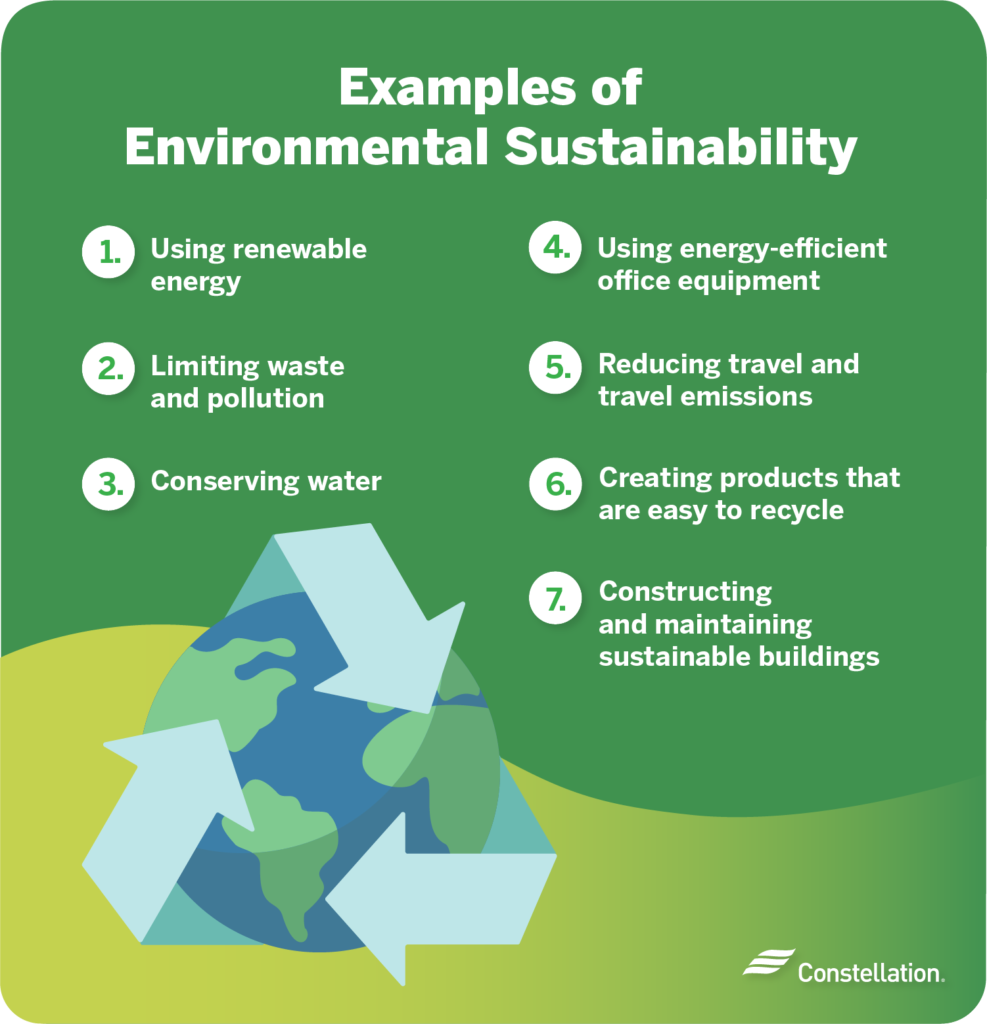
What Is Environmental Sustainability? | Constellation
On a farm level, I've seen drip irrigation cut water use by 70% while increasing crop yields. That's not magic. That's applied science. It's delivering the exact amount of water to the root zone at the exact time the plant needs it, instead of flooding an entire field. It's expensive to install, yes. But it pays for itself in three years if water is priced correctly. The problem is we often subsidize water, making it cheap to waste.
We also have to protect the sources—the watersheds. A forest captures, filters, and releases water slowly. When you clear-cut that forest, you get flash floods followed by drought. Paying to protect those forests is often cheaper than building a massive water treatment plant. That's the kind of holistic thinking that separates real experts from the amateurs.
Soil Health: The Foundation Most People Ignore
Everyone stares at the trees or the animals. Nobody looks at the dirt. Big mistake. Healthy soil is the most undervalued environmental resource on the planet. It stores carbon, filters water, and grows our food. We have poisoned and eroded it for a century through industrial agriculture, relying on synthetic fertilizers that kill the microbial life.
Sustainable soil management is simple in theory: feed the soil, not the plant. That means cover crops, no-till farming, and composting. When you have healthy soil, you use less water, less fertilizer, and fewer pesticides. The crop is more resilient to drought and disease. It's a complete paradigm shift from the chemical-intensive farming of the last 70 years.
I remember visiting a farm in Kansas that had been practicing no-till for 15 years. During a terrible drought, his neighbors' crops withered and died. His fields were green. Why? Because the organic matter in his soil acted like a sponge, holding moisture deep in the ground. He had essentially built a hydrological battery. That is what responsible resource management looks like on the ground.
The kicker? This also sequesters massive amounts of carbon out of the atmosphere. It's one of the few climate solutions that actually works, is cheap, and has zero downside. But it requires patience and a break from the short-term profit cycle. Most farmers are paid to produce yield, not soil health. That's the policy failure we need to fix.
The Elephant in the Room: Biodiversity vs. Productivity
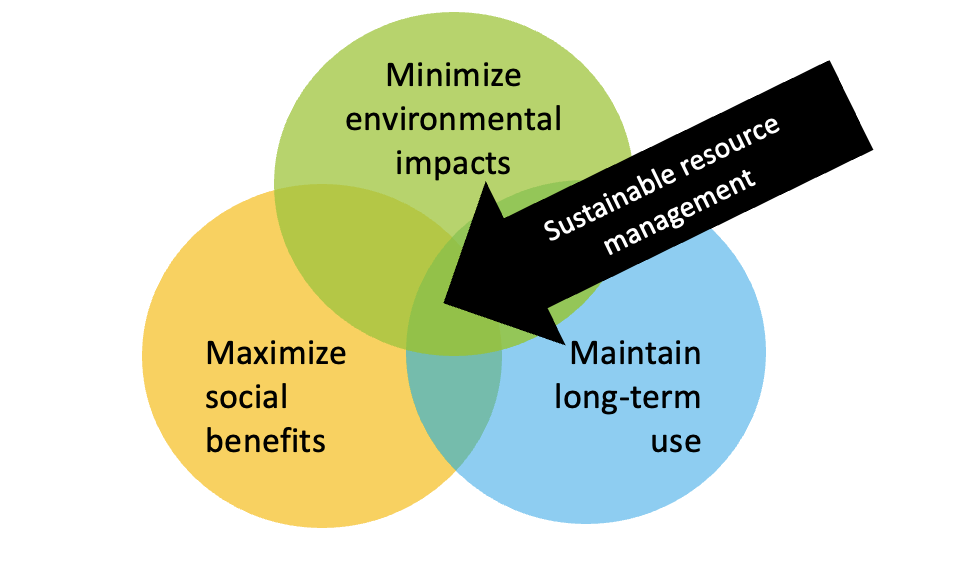
Resource and Waste Management 101 | UNB
Here's where things get uncomfortably real. There is a tension between extracting resources for human use and leaving enough space for other species. We can't pave everything. We can't cut every tree. We have to draw a line and say, "This is for the rest of life." If we manage environmental resources sustainably, we must manage for the entire system, not just our slice of it.
Why Monocultures are a Liability
A monoculture—whether it's a corn field or a pine plantation for timber—is brittle. It's a house of cards. One disease, one pest, one climate shock and it can collapse entirely. Biodiversity is the insurance policy of nature. A diverse forest is more productive over time than a single-species plantation. It resists fire better. It recovers from storms faster. It supports pollinators and predators that keep pests in check.
I've consulted for logging companies that thought they were managing forests because they planted trees after cutting them down. They weren't managing a forest. They were managing a fiber farm. There's a huge difference. A sustainable environmental resource strategy involves mimicking natural disturbances. You take some trees, but you leave snags for woodpeckers, you leave some deadfall for soil nutrients, you leave corridors for animals to move.
The same applies to fisheries. You can't just pull out every single cod and expect the population to bounce back. You need to leave genetic diversity in the water. You need to protect spawning grounds. You need to manage for the predator-prey balance. This requires something humans are terrible at: restraint. Knowing when not to take.
So here is the list of non-negotiable principles for any operation claiming to be sustainable:
Sustainable Management Of Natural Resources
The Role of Measurement and Painful Truths
If you can't measure it, you can't manage it. That's a cliche because it's true. But measuring environmental resources is incredibly hard. You can't just count the trees. You have to measure soil carbon, water retention, biodiversity indices, air quality, and social impacts. Most companies barely track their own electricity bill, let alone their water footprint or supply chain deforestation.
But technology is helping. Satellite imagery, drone surveys, and soil sensors are getting cheaper and more accurate. There is no excuse anymore for not knowing what is happening on your land or in your supply chain. The data is available. The question is whether you have the courage to look at it and act on it.
I once forced a client to look at the real cost of their water use. They were paying pennies for water, but the external cost—the river drying up, the aquifer dropping, the loss of fishing livelihoods downstream—was enormous. When we internalized that cost, their "cheap" input suddenly looked like a massive liability. How to manage environmental resources starts with understanding the true cost of everything you touch.
This isn't about being perfect. It's about being honest. You will make mistakes. You will accidentally kill a fish population or cut a tree that was a habitat for an endangered owl. The goal is to learn, adapt, and do better next time. Sustainability is a process, not a certificate you hang on the wall.
Common Questions About How to Manage Environmental Resources Sustainably

Building Biodiversity | Resource Panel
What is the single most impactful thing an individual can do?
Reduce waste, specifically food waste. When you throw away food, you waste all the water, energy, and land that went into producing it. Composting helps, but buying only what you'll eat is the most direct action. Seriously, it's the lowest hanging fruit.
Is sustainable resource management only for big corporations?
Not at all. A small farmer, a local restaurant, or a single household can practice it. It's a mindset of closing loops and reducing waste. A local business managing its water runoff or sourcing ingredients from regenerative farms is just as important as a multinational setting a net-zero target.
Can a business be profitable and truly sustainable?
Absolutely, but it requires a different financial model. You have to ignore short-term quarterly returns and invest in long-term system health. The most profitable firms I've seen in the long run are the ones that didn't deplete their own resource base. You simply cannot profit off a dead planet in the long term.
Why is pricing natural resources so controversial?
Because water, air, and biodiversity are often seen as public goods or free gifts of nature. Putting a price on them feels wrong to many people. The reality is, we already pay a high price through pollution and scarcity. Proper pricing encourages efficient use and funds restoration. It's about honesty, not greed.
What is the biggest mistake you see in the field?
Greenwashing. Pretending a small, token effort constitutes true sustainability. Planting a few trees while clear-cutting a primary forest. Calling a product "eco-friendly" because it uses less plastic in the packaging, while ignoring the massive carbon footprint of the supply chain. It's a lack of integrity that undermines real progress.

Post a Comment for "The Secret of Info About How To Manage Environmental Resources Sustainably"
Post a Comment